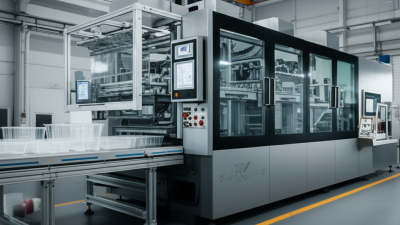
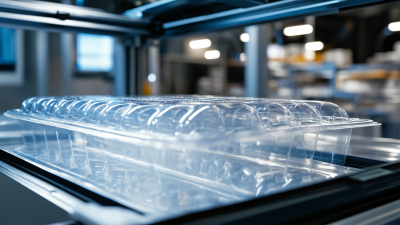
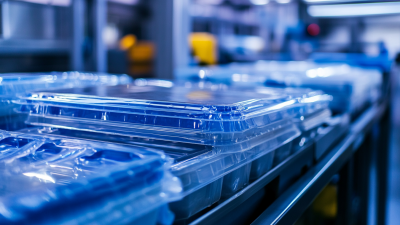
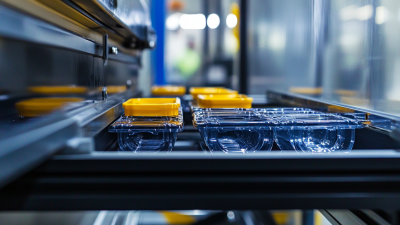
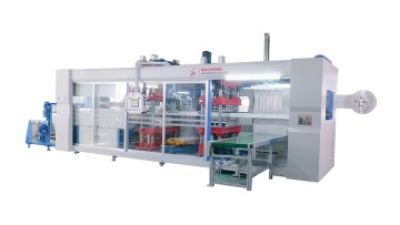
In today’s ever-changing world of manufacturing, the Plastic ThermoForming Machine really plays a crucial role in making all sorts of plastic products for different industries. As technology keeps evolving, folks in the field are starting to see just how important this machinery is. Dr. John Smith, an expert in polymer processing, mentions, “The Plastic Thermoforming Machine doesn’t just boost efficiency — it also offers more design freedom, which is a big deal in today’s fast-moving market.”
thermoforming has become a go-to method for creating detailed shapes and lightweight parts, making it super valuable in industries like packaging and even automotive. Basically, it works by heating up sheets of thermoplastic until they’re soft enough to mold, allowing manufacturers to craft custom designs that fit specific customer needs and make the most out of their materials. As more industries look for sustainable options, this technology keeps gaining importance, sparking innovation and shaping how things are made in the future.
Getting a good grasp of how Plastic Thermoforming Machines work and what they can do is pretty important for businesses that want to get the most out of this tech. This intro dives into the basics — explaining how it works and the big impact it can have in turning raw materials into useful, well-designed products with greater efficiency and flexibility.
What is a Plastic Thermoforming Machine?
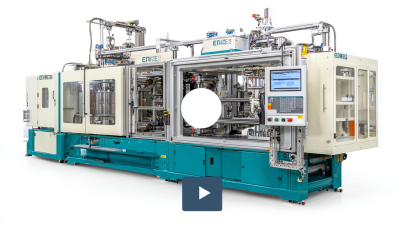
A plastic thermoforming machineis a crucial piece of equipment used in the manufacturing process of various plastic products. This machine operates by heating Plastic Sheets until they become pliable, allowing them to be molded into specific shapes using a variety of forming techniques. The thermoforming process can be categorized into several types, includingvacuum forming, pressure forming, and mechanical forming, each designed to meet different production needs and specifications. According to a report by Grand View Research, the global thermoforming plastic market is expected to reach a valuation of USD 9.64 billion by 2025, driven by increasing demand in industries such as packaging, automotive, and consumer goods.
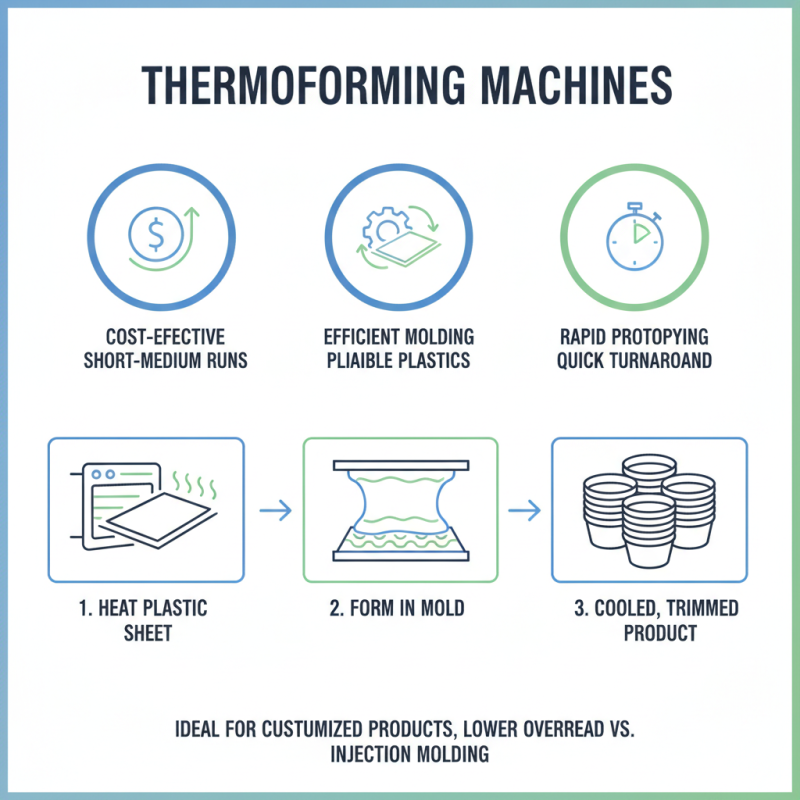
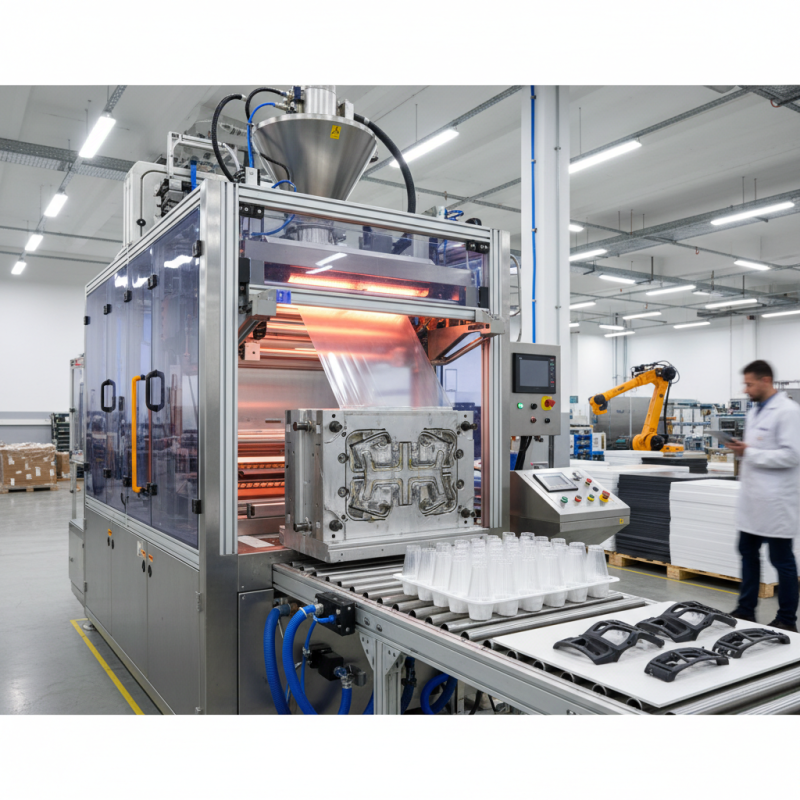
The principle behind the operation of a plastic thermoforming machine involves a few key steps. Initially, plastic sheets are heated in an oven to a temperature suitable for softening. Once the material is soft and malleable, it is then placed over or into a mold. The machine then either utilizes vacuum pressure or mechanical force to shape the heated plastic against the mold's contours. After cooling, the formed plastic is ejected, yielding a product that is ready for further processing or finishing. Industry data indicates that the efficiency of thermoforming processes can greatly enhance production output and reduce material waste, leading to more sustainable manufacturing practices. This has made thermoforming an attractive option for many manufacturers looking to optimize their production lines.
The History and Development of Thermoforming Technology
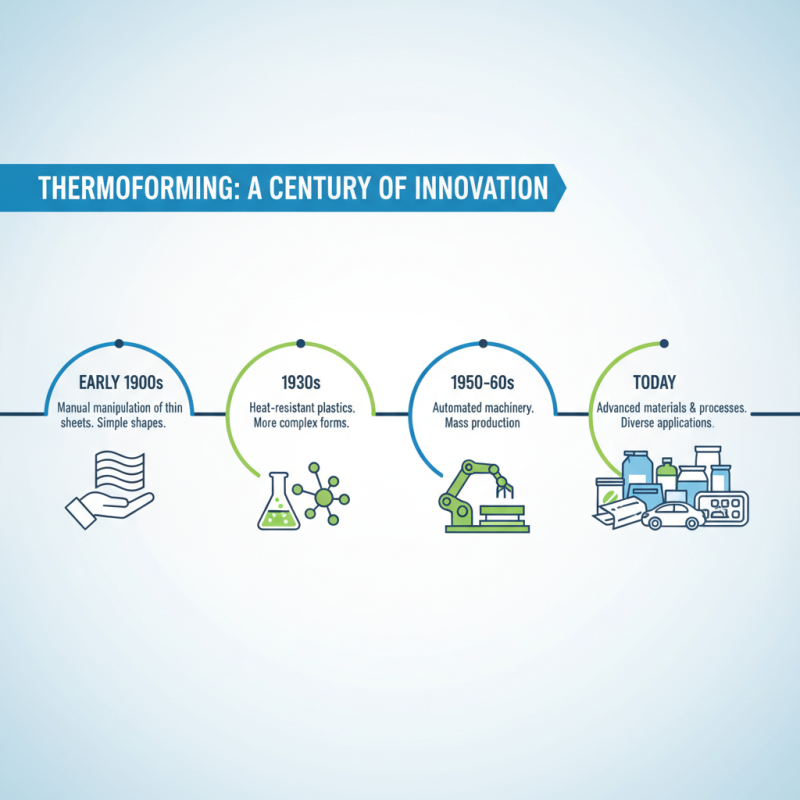
Thermoforming technology has a rich history that dates back to the early 20th century. Initially, the process involved the manipulation of thin sheets of materials, primarily to create simple shapes for various applications. The advent of heat-resistant plastics in the 1930s marked a significant turning point, paving the way for more complex and efficient production techniques. By the 1950s and 60s, advancements in machinery and material science allowed manufacturers to explore the potential of thermoforming at a larger scale. This period saw the rise of automated processes, which significantly increased production efficiency and molded a wider array of products.
As the technology continued to evolve, the late 20th century brought significant improvements in computer-aided design and manufacturing. These innovations enabled greater precision and customization in thermoforming applications, allowing for intricate designs and reduced material waste. The development of various plastics, including those with enhanced strength and flexibility, further expanded the scope of thermoforming. Today, the technology serves a vast array of industries, from packaging to automotive, signifying its enduring relevance and adaptability in an ever-changing market. The transition from rudimentary methods to sophisticated machinery illustrates the dynamic nature of thermoforming technology and its role in shaping modern manufacturing practices.
Key Components of a Plastic Thermoforming Machine
A plastic thermoforming machine consists of several key components that work together to shape plastic materials into desired forms. The process begins with a heating element that is crucial for softening thermoplastic sheets. This heated sheet is then carefully draped over a mold, which defines the shape of the final product. The heating element typically includes infrared or convection systems that ensure uniform temperature distribution, allowing for consistent forming results.
Once the plastic sheet is adequately heated, it is formed over the mold using a combination of vacuum and pressure. The vacuum system plays a vital role by creating a suction that pulls the softened plastic tightly against the mold. Additionally, pneumatic or mechanical pressure may be applied to enhance the molding process. To secure the formed shape, cooling systems are integrated into the machine, allowing the plastic to solidify and retain the desired dimensions before being removed from the mold.
Another important component is the control system, which ensures that the process parameters such as temperature, time, and pressure are precisely monitored and adjusted. This digital or analog control system enables operators to optimize the equipment’s performance for various plastic types and thicknesses, facilitating efficiency and product quality throughout the production cycle. Together, these key components enable the plastic thermoforming machine to transform raw materials into useful products with accuracy and efficiency.
The Thermoforming Process: Step-by-Step Breakdown
The thermoforming process involves several critical steps to transform plastic sheets into useful products, making it essential to understand each phase. The first step begins with selecting the appropriate plastic material, which is typically in the form of sheets. The chosen plastic sheet is then heated until it becomes pliable, a key part of the process that allows it to be shaped easily. This heating can be done using various methods such as infrared heaters or convection ovens, ensuring uniform heating across the sheet.
Once the plastic is adequately softened, the next phase involves the actual forming process. The heated sheet is placed over a mold that defines the desired shape of the final product. A vacuum is usually applied to draw the sheet tightly against the mold, ensuring that it takes on the contours of the mold accurately. In some cases, air pressure may also be used to assist in the formation. After the sheet has cooled and solidified in the mold, it can be removed, resulting in a finished product ready for trimming and additional processing if necessary. This step-by-step breakdown illustrates the efficient and versatile nature of the thermoforming process, which is widely utilized in various industries for packaging, automotive components, and design prototypes.
Types of Thermoforming: Vacuum vs. Pressure
Thermoforming is a widely used manufacturing process that involves molding plastic sheets into specific shapes using heat. Within this process, there are two primary types: vacuum thermoforming and pressure thermoforming. Each method has its unique characteristics and applications, catering to various industrial needs.
Vacuum thermoforming is the more commonly used technique. In this process, a heated plastic sheet is draped over a mold, and then a vacuum is applied to draw the sheet tightly against the mold's surface. This not only ensures a close fit but also enables the production of intricate designs with detailed features. The advantages of vacuum thermoforming include its efficiency, cost-effectiveness, and suitability for creating lightweight parts, making it ideal for packaging, disposable trays, and lightweight structural components.
On the other hand, pressure thermoforming utilizes air pressure to force the heated plastic against the mold. In this method, higher pressure achieves even greater detail and improved wall thickness, which can be critical for applications requiring durability and strength. Pressure thermoforming is often favored in industries where precision and robustness are essential, such as automotive parts, appliance housings, and custom manufacturing. Overall, both methods play significant roles in plastic fabrication, each tailored to meet specific demands in different sectors.
What is a Plastic Thermoforming Machine and How Does it Work - Types of Thermoforming: Vacuum vs. Pressure
| Type of Thermoforming | Description | Applications | Advantages | Disadvantages |
| Vacuum Thermoforming | A process where a plastic sheet is heated and then drawn over a mold using atmospheric pressure. | Packaging, trays, automotive parts, and toys. | Cost-effective for low to medium production runs; simple setup | Limited detail and thickness control; may require additional machining for precision. |
| Pressure Thermoforming | Involves using air pressure to form heated plastic sheets around a mold. | High precision applications like medical devices, high-end packaging, and durable goods. | Superior detail and dimensional accuracy; ideal for complex shapes. | Generally higher costs; more complex setup compared to vacuum forming. |
Applications of Thermoformed Plastics in Various Industries
Thermoformed plastics have found a wide array of applications across various industries due to their versatility and efficiency. In the packaging industry, thermoforming is commonly used to create durable and lightweight containers, trays, and protective packaging that efficiently safeguard products during transport and storage. The ability to customize shapes and sizes according to specific needs makes thermoformed materials ideal for everything from food packaging to electronic equipment enclosures.
Moreover, the automotive sector has increasingly adopted thermoformed plastics for interior and exterior components. These materials contribute to lighter vehicle designs, which enhance fuel efficiency while maintaining structural integrity. Common applications include dashboard panels, door liners, and under-hood components.
Additionally, the medical field utilizes thermoformed plastics for creating sterile packaging, disposable surgical instruments, and various medical devices, ensuring both functionality and patient safety. The adaptability of thermoforming technology allows industries to innovate and design products that meet evolving consumer demands while adhering to regulatory standards.
Advantages and Limitations of Using Thermoforming Machines
Thermoforming machines have gained popularity in various industries due to their ability to efficiently mold plastic into specific shapes. One of the primary advantages of using these machines is their cost-effectiveness, especially for short to medium production runs. The process is relatively simple: sheets of plastic are heated until pliable and then formed into desired shapes using molds. This allows for rapid prototyping and quick turnaround times, making thermoforming an attractive option for businesses looking to create customized products without the high overhead costs associated with injection molding.
However, there are limitations to consider when using thermoforming machines. The thickness of the material can affect the final product's strength and durability, as thermoforming typically works better with thinner sheets. Additionally, the design capabilities may be restricted compared to other manufacturing processes; intricate shapes and fine details are often more challenging to achieve. Furthermore, while thermoforming is suitable for large volumes, it may not be the best choice for very large or complex items that require heavy-duty materials, which could necessitate other manufacturing methods to ensure quality and performance.
Maximizing Production Efficiency: An In-Depth Look at the Plastic Thermoformer 3-Stations ZN650
The ZN650 3-Stations plastic thermoformer stands out as a remarkable advancement in production efficiency, particularly in the realm of thermoforming plastic materials. With its sophisticated automation system and the use of independent servo motors for each station, this machine ensures precise control and enhanced productivity. It effectively accommodates various materials such as PP, PET, and biodegradable options, making it versatile for different production needs while achieving a maximum forming area of 760 x 650 mm and a depth of 120 mm.
Incorporating cutting-edge molding technology, the ZN650 significantly reduces the necessity for manual labor and minimizes secondary pollution, contributing to a more sustainable production process. The machine operates at an impressive speed of up to 40 molds per minute, effectively doubling overall production efficiency. Its robust structure, centered around a steel box body that blends forming, cutting, and stacking capabilities, underscores its durability. The thoughtful design not only provides a visually appealing aesthetic but also simplifies maintenance, making it an ideal choice for those looking to enhance their automation in sheet thermoforming and die-cutting applications.
FAQS
: A plastic thermoforming machine is used in the manufacturing process to heat and mold plastic sheets into specific shapes for various plastic products.
The thermoforming process involves heating plastic sheets until they become malleable, placing the softened material over or into a mold, and then using vacuum pressure or mechanical force to shape the plastic against the mold contours.
The thermoforming process can be categorized into several types, including vacuum forming, pressure forming, and mechanical forming, each tailored to different production needs.
Key components include heating elements, molds, vacuum systems, pneumatic or mechanical pressure systems, cooling systems, and control systems that monitor and adjust process parameters.
The heating element, which may include infrared or convection systems, is crucial for softening thermoplastic sheets by ensuring uniform temperature distribution for consistent forming results.
The vacuum system creates suction that pulls the softened plastic tightly against the mold, ensuring precise shaping during the forming process.
Cooling is important as it allows the formed plastic to solidify and retain the desired dimensions after being shaped, ensuring product accuracy before removal from the mold.
The control system allows operators to monitor and adjust parameters such as temperature, time, and pressure, optimizing the machine's performance for different plastic types and thicknesses.
Thermoforming enhances production output and reduces material waste, making it a sustainable manufacturing option that helps optimize production lines.
Industries such as packaging, automotive, and consumer goods benefit from the advancements and efficiencies provided by plastic thermoforming technology.
Conclusion
A Plastic Thermoforming Machine is a specialized equipment used to shape plastic sheets into desired forms through the application of heat and pressure. The history of thermoforming technology dates back several decades, evolving from simple processes to sophisticated machinery equipped with advanced features. Key components of these machines include heating elements, forming molds, and cooling systems, which work together during the thermoforming process to ensure precision and efficiency.
The thermoforming process is typically broken down into distinct steps, including heating, forming, and cooling, and can be categorized into two main types: vacuum and pressure thermoforming. This technology finds applications across various industries, such as packaging, automotive, and medical, due to its ability to create lightweight yet durable products. While the advantages of using a Plastic Thermoforming Machine include cost-effectiveness and versatility, there are limitations related to material types and design complexities that must be considered.